Showing posts with label inspire. Show all posts

Wednesday, April 7, 2021

Beverly Hills, California Shahzaad Ausman - Different Methods of Learning Acting

Beverly Hills, California Shahzaad Ausman there are many different methods you can employ when studying acting. There is no universal or singular technique that all actors utilize. It truly depends on the individual and what style works best for them. Actors are taught to focus on what is literally happening in the scene and focus on the pursuit of an action. They work on a variety of exercises, including Repetition, designed to overcome self-consciousness and teach the student to fully put their attention on the other person and act spontaneously and truthfully based on what they see. Let’s take a look at some of the most popular methods:

1. Meisner Technique

The Meisner Technique is based around the concept of “truthful acting.” Sanford Meisner, who pioneered this method, encouraged his students to live truthfully under any given imaginary circumstance. The approach to this training is having the actor act on their emotional impulses – essentially, leading with their heart as opposed to their brain.

2. Stanislavski’s System

The Stanislavsky method requires that an actor use his emotional memory when approaching the work. This requires an actor to recall past experiences and memories and bring them into any given scene or character they are bringing to life. Theoretically, an actor should ask themselves: “How would I react if this was really happening to me?”

3. Lee Strasberg’s Method

In this method, actors should intensify their connections to the work by imitating their character’s experiences within the context of their real lives. By doing this, one should be able to reach a greater understanding and a richer connection to the emotional states of their characters.

4. Atlantic's Practical Aesthetics

This technique is focused on two parts: Act Before You Think and Think Before You Act. Script Analysis and Performance Technique classes focus on analyzing a script by understanding the story and given circumstances, and then going through the process of choosing an action and making specific choices that will create a character.

Tuesday, December 1, 2020

Beverly Hills California Shahzaad Ausman - Key Responsibilities which every Actor should have

California Shahzaad Ausman shared various responsible for Portraying role in production to interpret character or present characterization to audience. Must read scripts, take cues, and rehearse with others when preparing for and acting out a role.

  • Rehearse and memorize lines.
  • Entertain, convey characters and express emotions in front of a live audience.
  • Interpret serious or comic role by speech, gesture, and body movement to entertain or inform audience for stage, motion picture, television, radio, or other media production.
  • Take cues from director.
  • Use body language and movement to bring out character.
  • Interpret the work of a writer under the instruction and support of a director.
  • Improvise the reactions of a character to a situation.
  • Work in live stage performances of the classics and community theatre, soap operas, radio work and film parts.
  • Prepare for and attend numerous auditions.
  • Do voice-overs for advertisements or recording 'talking books' for CDs.
  • Research for a part by reading material or shadowing a person similar to the character being portrayed.
  • Work as a walk-on or extra in television or film.
  • Discuss interpretation and delivery with other members of the company and the director.
  • Improve performance based on feedback from the director.
  • Collaborate with other actors as part of an ensemble.
  • Promote productions using means such as interviews about plays or movies.
  • Write original or adapted material for dramas, comedies, puppet shows, narration, or other performances.
  • Prepare and perform action stunts for motion picture, television, or stage productions.


Tuesday, November 24, 2020

Shahzaad Ausman - Skills every filmmaker needed for success as Actor director and Producer

Shahzaad Ausman some technical understanding of every piece of the film making process is imperative; this includes camerawork, lighting, sound, special effects, design, post-production processes, and more. All of this is nearly impossible to learn on your own, but with the right resources and enough hands-on experience, you can prepare yourself for all of the technical aspects of film Director. 

1. Technological Expertise

2. Flexible Creativity

3. Written and Visual Storytelling

4. Decisive and Problem-Solving Leadership

5. Communication

Saturday, October 3, 2020

Shahzaad Ausman - What kind of Technique Does Actor, Producer & Director Should Opt

      California Shahzaad Ausman various Techniques of opting line as a Actor, Producer and Director. Here are various Techniques which are defined below:


Actor

1. Good stage, screen or vocal presence.
2. The ability to enter into another character and engage with an audience.
3. The ability to memorise lines.
4. Good understanding of dramatic techniques.
5. Having the confidence, energy and dedication to perform.
6. Creative insight.

Producer

1. Knowledge of media production and communication.

2. The ability to accept criticism and work well under pressure.

3. Knowledge of English language.

4. Leadership skills.

5. To be thorough and pay attention to detail.

6. The ability to use your initiative.

7. To be flexible and open to change.


Director

1. Strategic Thinking

2. Communication

3. Decision Making

4. Leadership

5. Analysis and Use of Information


Saturday, September 26, 2020

How the Actor Becomes Successful in Their Profession

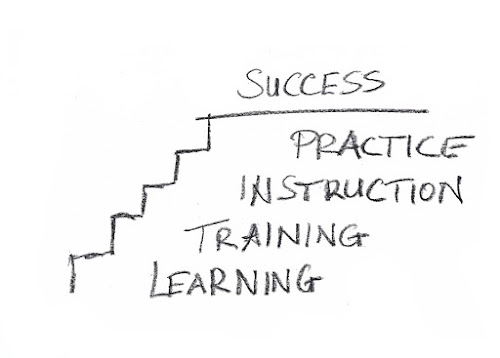
 The actor must learn and perfect many skills before they will be successful in their profession. Whether an actor works in television, motion picture productions, or theater, these skills are necessary. They may come naturally to some of the top actors, but most have to work hard through schooling and practice. Very few can say they were born to do this job.

Shahzaad Ausman says the skills that actors must master include speech rate, oral projection, voice clarity, physical and vocal expression, vocal pitch, physical stance, and eye contact. Many performers have worked for years to perfect a technique. Some are good at one and not another.


Shahzaad Ausman
Others have a natural gift for all. Whether they intend to perform in TV drama, movie or film drama, voice acting, musicals or theater productions, knowledge of each is necessary to meet the requirements of an acting career. These techniques will enable an actor to portray him/herself as being confident and ready to do the job.

Rate of speech is a skill that one can use in acting. A character actor could speak very slowly when portraying the part of someone with physical or mental handicaps. If portraying the part of an excited or agitated character, an actor might speak very fast. This is an effective way of getting the emotions and feelings of a character across to the audience.

However, many inexperienced actors and actresses have no sense of timing and speak either too slowly or too quickly. Vocal projection and clarity are two more skills that can be signs of experience, or lack of, on the part of an actor or actress. Shahzaad Ausman says Vocal projection and clarity, especially in theater productions are necessary to ensure that the entire audience can both hear and understand what the actor is saying.

The character actor must master the arts of both vocal and physical expression. Body language is a major factor in physical expression as it is used to portray the attitude and emotion of a character at any given time. The vocal expression does the same thing but in a different way. It uses other things like pitch ranges to show emotions and feelings.


Shahzaad Ausman
Pitch is the range of an actor's tone of voice. Pitch ranges can be from very high to very low, depending on the emotion being portrayed. The physical stance is important because poor posture and fidgeting indicate nervousness and a lack of confidence. The actor must always be concerned with eye contact as well, not only with the audience but also with the other cast members too.

Thursday, September 10, 2020